
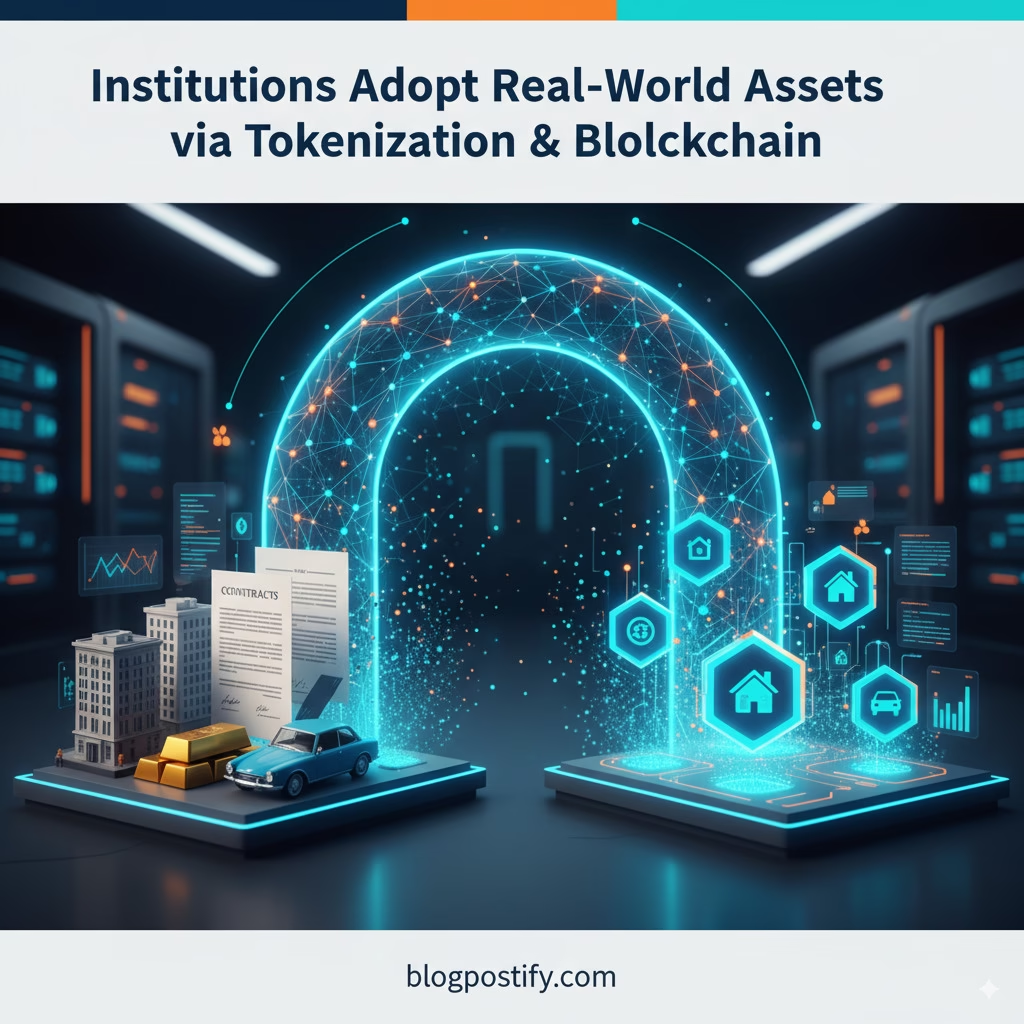
 The past few years have begun to experience a significant transformation in the financial field due to asset tokenization. It has become one of the most prominent innovations as traditional assets are becoming more digital, more liquid, and available to a broader audience of investors. Real estate to gold, art to stocks, just about anything of value will now digitalize in the form of tokens. This is a very basic yet effective concept that is attracting the focus of individuals as well as huge organizations.
The idea of tokenization is not only a new technology; it is also a redesign to how the global financial system functions. The tokenization of money could change the dynamics surrounding the movement of funds within the economy because of its greater accessibility to assets, quicker settlements, and improved transparency.In this blog we will discuss how institutions are adopting real world assets in the modern economy.
What is Asset Tokenization?
Asset tokenization is the conversion of the ownership rights of a physical or digital asset into digital tokens. These tokens are available on a blockchain, a safe and transparent system. Take the case of a luxury building that is available at 10 million dollars.
Usually, the very rich investors like to purchase it. With tokenization, however, the building will break into 10,000 tokens that will have a value of 1,000. At this time, hundreds of other individuals are able to invest in that construction by buying tokens. This is a gateway to inclusiveness, as now even small investors will have access to markets that were only accessible to the rich.
Tokenization of Real-World Assets
Digitizing real-life assets into digital tokens is one of the greatest uses of tokenization. They are real estate, commodities such as oil and gold, art, shares in a company. All the institutions view it as a way of making their assets more liquid and tradable.
An example of this is real estate which is usually popular as illiquid since it is not easy to dispose of a piece of property. However, with tokenization, it becomes much easier to trade the tokens between buyers and sellers in digital platforms. This brings the barriers of entry down and makes it more efficient.
Blockchain Integration in Tokenization
Blockchain integration goes hand in hand with tokenization. With blockchain technology, all of the tokens will log into a decentralized ledger, and hence, the transactions are secure and transparent. The reason why institutions prefer blockchain is that it minimizes fraud, double-spending, and manipulation.
It also records an everlasting history of ownership which is necessary to draw the legal and financial records. That is big banks, asset managers and even governments will take tokenization with blockchain.
Why Institutions Are Adopting Asset Tokenization?
Big organizations, including banks and investment firms, are not linked with being fast followers of new trends. But tokenization has their interest because of a variety of reasons:
- Efficiency – Due to the elimination of middlemen, you can trade tokenized assets 24/7. This saves time and costs.
- Liquidity – Fractions of tokens are easy to sell by investors compared to traditional assets which usually need complete ownership.
- Transparency – Blockchain makes things such as ownership and transactions transparent and traceable.
- Global Access – No complex mechanisms will require to allow investors in various countries to access tokenized markets.
This set of advantages is why tokenization is why it is becoming prominent in institutions. They view it as the future of trading and management of assets.
Connection to Cryptocurrency and Crypto Coins
Most individuals equate tokenization with crypto coins, which is not the case. Cryptocurrencies (such as Bitcoin or Ethereum) are digital coins, whereas tokenized assets are computer versions of tangible goods. Nevertheless, they are both capable of using on the same blockchain.
To investors, tokenization is the period between the old and the new digital world. It also provides a larger number of choices in terms of determining which cryptocurrency to invest in, as some tokenized assets are set to be stable and good to real-life values.
The Future of Asset Tokenization
Major institutions around the world are testing their tokenization projects.
- Banks: There are banks that have begun to issue tokenized versions of bonds and securities to their customers.
- Investment Funds: Asset managers are tokenizing funds which consist of fractions of real estate or art.
- Governments: Some governments are considering token related bonds in order to raise capital more effectively.
These instances demonstrate that tokenization is not merely a concept any longer–it is a reality in the field of mainstream finance.
Asset tokenization in the Future
Nevertheless, tokenization still has a bright future. Experts assume that within the following 5-10 years, the vast majority of financial assets will be digitalized. The institutions are already planning this transition through the construction of blockchain alliances and development of token-based offerings.
Advantages to the World Economy
The effect of tokenization can be beneficial to the worldwide economy. It can bring more investors into the market by making assets more available. Small businesses will find it easier to raise funds and people can diversify their investments without having to spend a lot of money. It may also help improve the confidence of financial systems by minimizing corruption and delivering transparent records. In sum, tokenization may make financial markets more open, fair, and efficient.
Challenges of Asset Tokenization
Both represent difficulties with Asset Tokenization. Although the idea of tokenization is promising, it also has its problems.
Regulation: Not all countries have regulations regarding digital assets, and the absence of clear legislation may hinder uptake.
Technology: Blockchain systems require the ability to process high volumes of transactions without any problems to enable the adoption across the world.
Security: Several concerns are raising about digital wallets and exchanges being hacked.
Education: There is still a hesitation to tokenization, as many investors and institutions are still getting familiar to the concept. The users must address such issues before tokenization is able to achieve its full potential.
Final Words
Asset tokenization is not a trend but a financial revolution. It transforms physical and digital assets into tokens, which make markets more inclusive, transparent, and efficient. Large institutions are embracing it due to its perceived ability to reduce costs, increase access and enhance trust.
The tokenization will change the nature of trading asset in the world with the aid of blockchain technology. It provides the entry points to both large and small participants and offers a system where anyone can contribute. The problems are real, but to date, the advancement has been significant and indicates that tokenization will feature significantly in the future of finance.